Can a model small enough to run in a browser tab do something useful? We spent a week finding out.
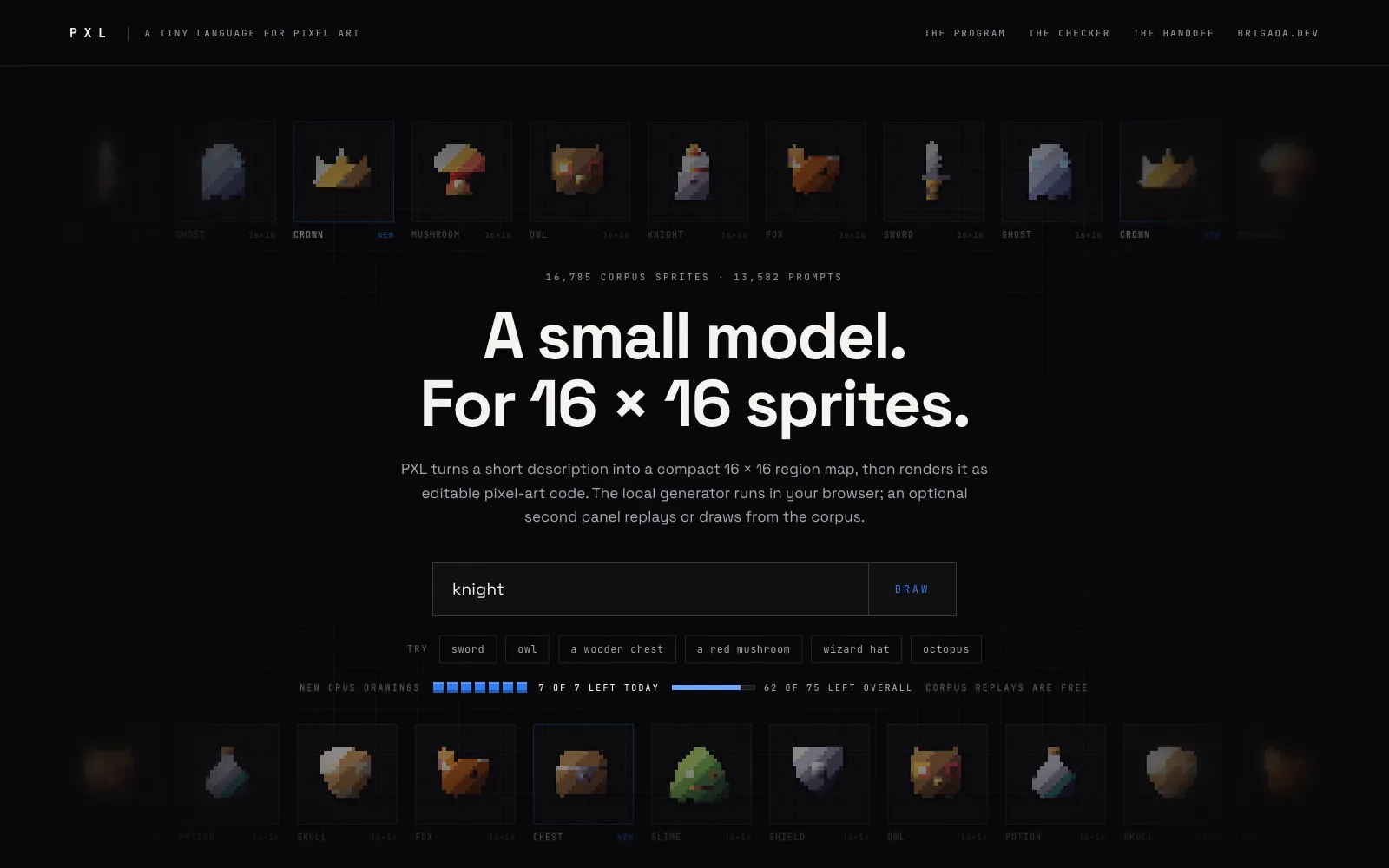
Edion Limani on our team wanted to build a game, and image models kept failing him: a different palette every time, no real grid underneath. So we built pxl, a small model that draws 16×16 sprites in your browser. No server, no API bill.
The obvious route failed. We fine-tuned language models at 600M, 1.7B and 4B parameters. They drew clean pixel art that was never what we asked for: 0 recognisable out of 88 prompts.
A language model writes one piece at a time, but a sprite is a square. So we stopped scaling up and built something much smaller.
The result is 440,000 weights in a 5.5 MB download. One sprite in four comes back clearly recognisable. Claude, the model that taught it, manages about half from a data centre. The whole experiment cost about $80 of GPU time.
That's how we build for clients too. Start with the data you already have, train a model you own, and run it on your own private servers. Your data never leaves and there's no per-request bill. A pilot takes weeks, not quarters.
Try it: pxl.brigada.dev.